FeatureTutorials
Android Retro Gaming Showcase: Native Ports, Dual-Screen Mods, and Voxel Overhauls
From native GameCube execution to complete visual overhauls, community projects are transforming classic game preservation on Android hardware.
Android Retro Gaming Just Got Even Better
Watch on YouTubeThe Rapid Rise of Native Android Projects
The Android retro gaming landscape is undergoing a remarkable transformation. Rather than relying solely on traditional software emulation, developers and community modders are increasingly delivering native ports, recompilation projects, dual-screen layouts, widescreen support, higher frame rates, and extensive visual overhauls. These projects breathe new life into classic titles that players have enjoyed for decades, making them significantly more accessible and customizable on mobile hardware.
Crucially, these advancements do not require high-end desktop hardware or complex setups. In most cases, all that is required is a compatible Android device and a legitimately acquired copy of the original game software. From interface overhauls to complete graphic reimaginings, the speed at which these community-driven projects are evolving has made Android one of the most dynamic platforms for classic game preservation.
Expanding Dual-Screen Play: A Link to the Past
One of the clearest demonstrations of this evolution is the dual-screen modification for The Legend of Zelda: A Link to the Past. Developed by Sam Yost, the project fundamentally rethinks how the 16-bit adventure is navigated on handheld hardware. Instead of forcing players to interrupt gameplay to open sub-menus, essential information—including inventory items, dungeon maps, and overworld progress—is permanently displayed on a dedicated second screen layout.
This quality-of-life adjustment creates a fluid interface that feels remarkably close to an official multi-screen release. Development on the project remains highly active; recent updates from the developer have introduced expanded customisation options, performance bug fixes, improved compatibility, and refined user interface polish, illustrating how rapidly open-source fan projects can mature.
Native GameCube Execution: Dusklight and Twilight Princess
Moving into 3D console generations, Dusklight represents one of the most technically ambitious projects currently available on Android. Originally conceived to bring The Legend of Zelda: Twilight Princess to PC with modern enhancements, Dusklight has expanded its scope to natively support Linux and Android platforms. This allows the game to run natively on handheld hardware without the processing overhead traditionally associated with emulator execution layers.
In addition to native execution, Dusklight incorporates a full suite of modern feature enhancements, such as high frame rates, widescreen display ratios, achievements, custom control mapping, and elevated graphics settings.
Installing Dusklight on Android
Setting up Dusklight begins by downloading the official Android APK directly from the project's website and completing the installation on your device. Users must supply a legitimate copy of the US GameCube release of Twilight Princess in ISO format. If the file is stored on an external storage drive, it should first be copied over to the device's internal storage.
Within the Dusklight application, selecting the disk image initiates an automatic verification process. Once verified, users can access an extensive settings menu to adjust graphics, performance profiles, and gameplay tweaks prior to starting the game.
Experience Twilight Princess with QoL changes with Dusklight
Adapting 3DS to Single Displays: Ocarina of Time 3D
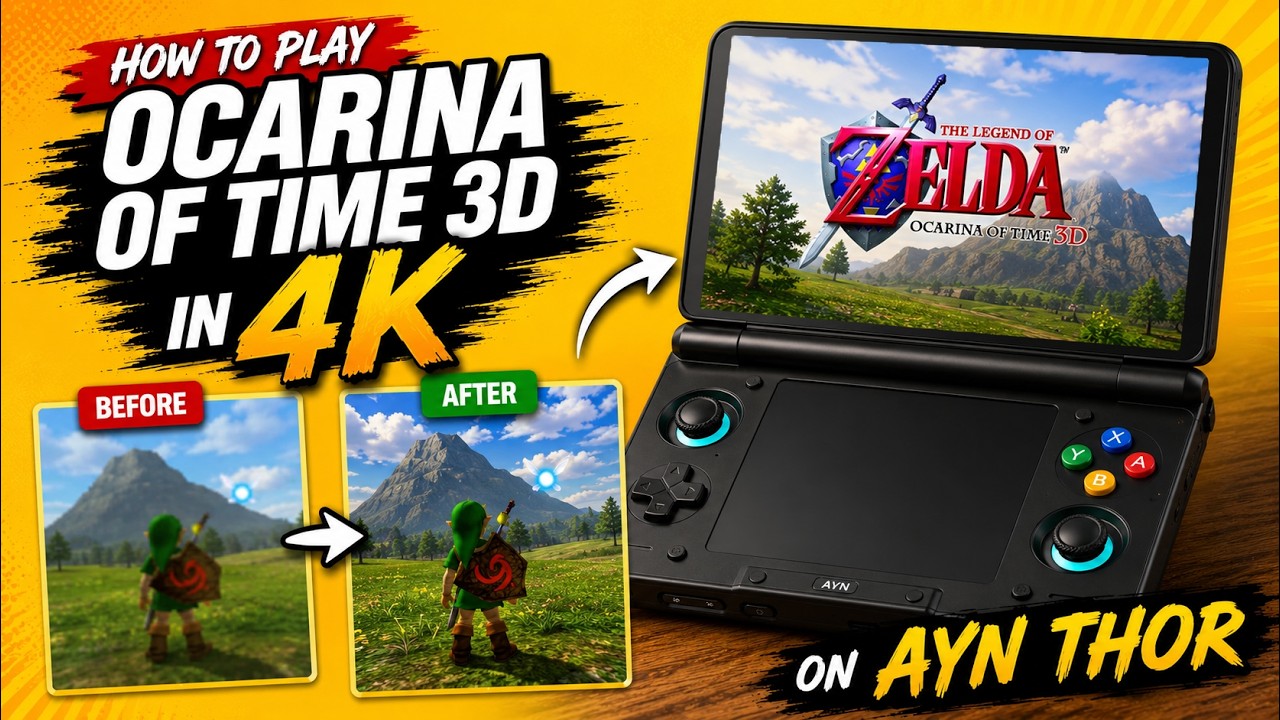
While dual-screen layouts work well on specialized setups, the vast majority of modern Android handhelds feature a single display. This hardware reality often makes Nintendo 3DS emulation awkward due to its dual-screen requirement. The single-screen mod for The Legend of Zelda: Ocarina of Time 3D addresses this directly by completely reworking the game's interface for single-display hardware.
Touch controls, equipment menus, and secondary display elements are restructured to fit seamlessly onto one screen. This eliminates the need to constantly toggle screen focus or shrink secondary display windows, delivering an experience tailored specifically for modern handheld form factors.
Installing the Ocarina of Time 3D Single-Screen Mod
To run the mod, users must install the Azahar emulator on their Android device and complete its initial directory and permission setup. A legitimate copy of either the US or PAL release of Ocarina of Time 3D is required. The single-screen mod package is downloaded as a compressed zip archive and extracted using an archive utility such as Z Archiver.
Inside the extracted archive, separate folders are provided for US and European game regions. Players open the dedicated mods menu for Ocarina of Time 3D within the emulator and copy the contents from the matching regional folder directly into the directory without renaming any files. Upon launching the game, players can swipe in from the screen edge to access the emulator's quick menu, changing the landscape layout parameter from standard dual-screen to single-screen mode.
Reimagining Classic Visuals: Pokémon Gen 1 Voxel Mod
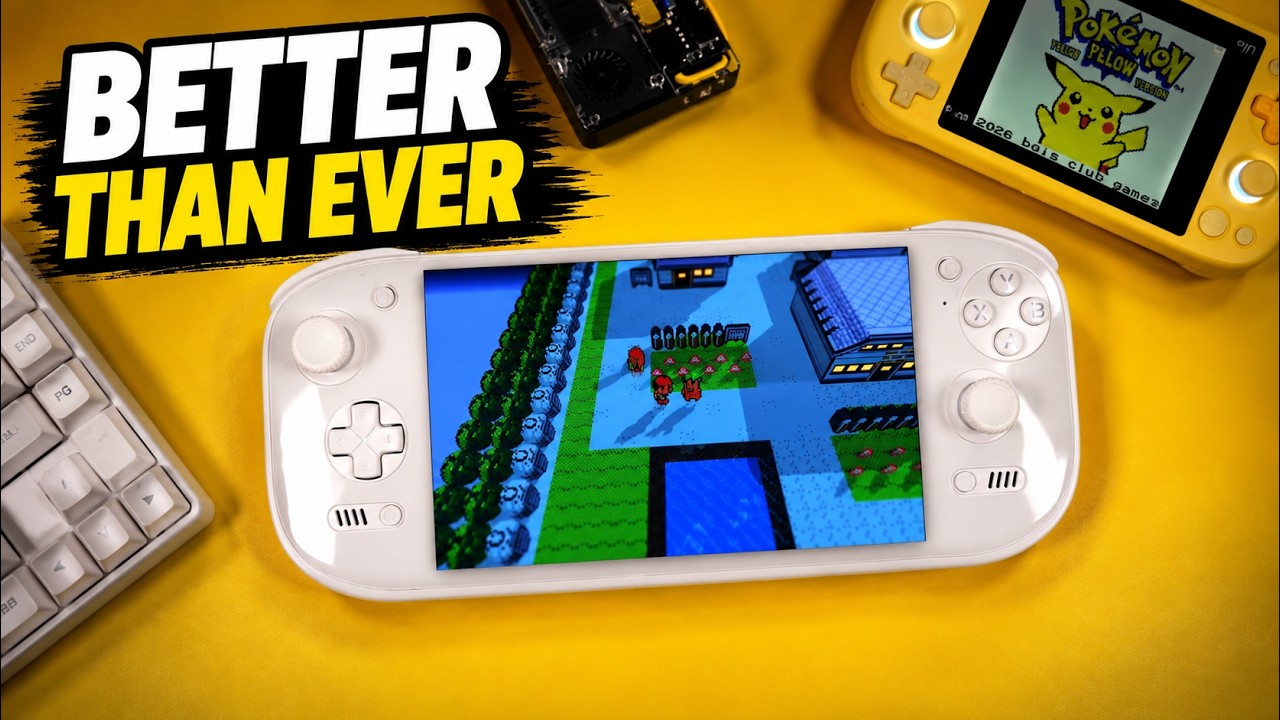
Among the most striking visual achievements in the scene is the Pokémon Gen 1 Voxel mod. Built upon the Gen 1 recompilation engine (Gen1Recomp), the project transforms the iconic 2D Game Boy sprites and environments into fully realized 3D voxel models while leaving the core RPG gameplay completely intact.
Getting the project running requires three distinct assets: the Gen 1 recompilation application downloaded from its official GitHub repository, the unextracted voxel mod zip file, and a legitimate Game Boy ROM of Pokémon Red, Blue, or Yellow. Within the recompilation app, users select their game version, import the ROM file, and import the mod zip through the application menu.
Once loaded, an updated options menu unlocks features not present in the original Game Boy releases, including a toggle for 3D voxel presentation and the ability to switch from original monochrome palettes to vibrant Game Boy Advance colour schemes. Active community development continues to deliver frequent updates and fixes to the project.
The Expanding Horizon of Android Modding
These featured projects represent only a fragment of what is currently happening across the platform. Parallel efforts like the Ship of Harkinian project have brought native PC and mobile compilation features to Nintendo 64 titles like Ocarina of Time and Majora's Mask, while native ports for Banjo-Kazooie and dual-screen projects for The Legend of Zelda: The Minish Cap continue to surface.
Driven by active open-source contributors, Android handhelds are rapidly evolving beyond simple emulation machines into versatile platforms for playing enhanced, definitive versions of classic games.