NewsGaming
Anbernic RG DDS Revealed: A Dream Dual-Screen Handheld Inspired by the Nintendo 3DS
Anbernic's newly revealed RG DDS pairs a 3DS-inspired clamshell design with Snapdragon hardware and a built-in stylus. Here's what we know so far.
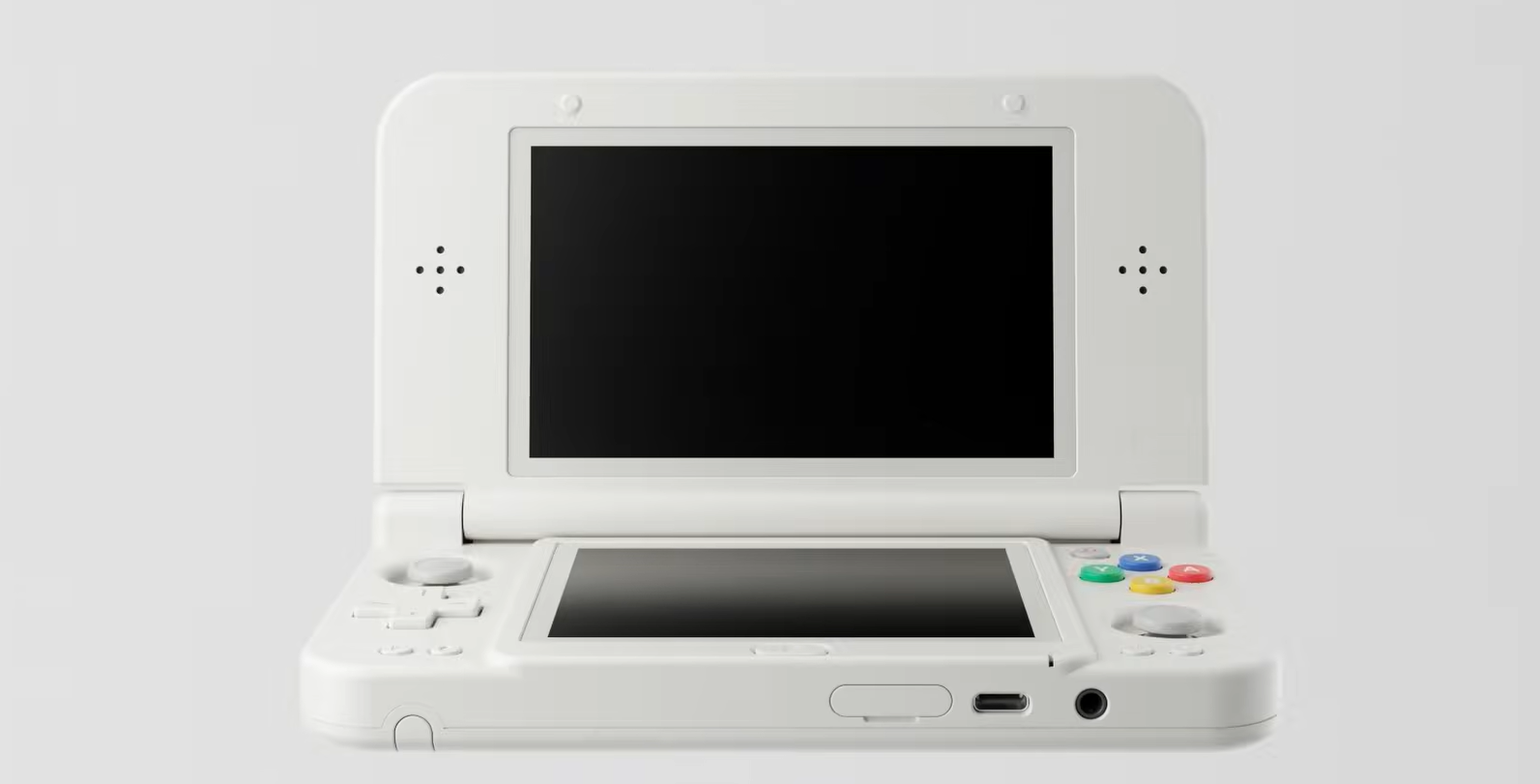
Anbernic has revealed the RG DDS, a new clamshell gaming handheld that takes its inspiration from Nintendo's New 3DS more directly than most modern retro devices. DDS stands for “Dream Dual-Screen”, and the early reveal points to a notably more ambitious machine than the company's budget RG DS family. With two differently sized displays, a built-in stylus and Qualcomm Snapdragon hardware, this is shaping up to be one of the most interesting dual-screen handheld announcements of the year.
The timing is particularly interesting. Dual-screen retro handhelds are no longer a novelty, but getting the controls, screen proportions and touch input right remains a challenge. The RG DDS appears designed around those details rather than simply putting two identical screens inside a folding shell.
A design made for 3DS-style gaming
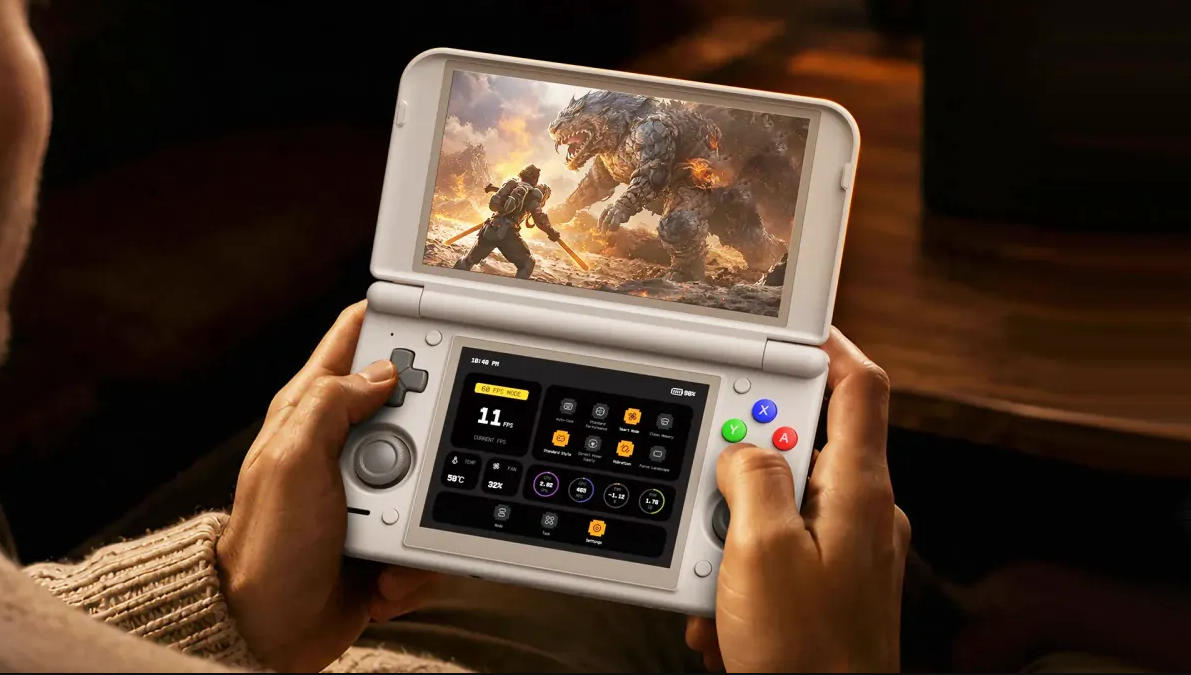
The most immediately recognizable feature is the layout. The RG DDS adopts a wider upper display, a smaller lower display and a control arrangement that closely resembles the New Nintendo 3DS. Early promotional images show the familiar folding form factor in several color options, including a light-colored model alongside darker alternatives.
Anbernic's newly released announcement trailer presents a 4.7-inch upper IPS display with a resolution of 1200 × 720 and a 4-inch lower IPS display at 960 × 720. The specifications shown in the reveal suggest that Anbernic is paying close attention to the different screen shapes used by Nintendo's handheld.
That matters because Nintendo DS and 3DS games often use their two displays in fundamentally different ways. A wider top screen and a more square lower touch display could make the experience feel more natural than on dual-screen devices built around matching panels. Actual compatibility, scaling quality and touch responsiveness will still depend on the software.
Snapdragon power and a built-in stylus
Anbernic's announcement identifies Qualcomm's Snapdragon G2 Gen 2 as the RG DDS chipset. That would mark a significant change in positioning compared with Anbernic's cheaper RG DS and RG DS Plus, both of which use Rockchip RK3568 hardware. However, processor branding alone cannot establish real-world emulation performance, thermal behavior or battery life.
A telescopic stylus that stores inside the handheld is another standout feature. It is an especially welcome design decision for touch-heavy DS-style games, where a loose pen can quickly become inconvenient. The stylus tip appears unusual in the promotional material, although its material, friction and precision cannot be established from images alone.
The announcement also presents a 6,000mAh battery and an AI-related button. Details of the button's functionality still need clarification. The usefulness of any translation feature will depend on how it is implemented and whether it works inside games.
RG DDS Will Come in Three Colors
How it differs from the RG DS Plus
Anbernic already sells the RG DS Plus, which has two 4.3-inch IPS displays, a Linux-based system and an RK3568 processor. Its official specifications list 1GB of RAM and a 4,000mAh battery. The RG DDS, by contrast, appears to target a higher-performance category with a different screen layout and Snapdragon silicon. Despite the similar names, these should not be confused as minor variations of the same device.
The bigger question is whether the new hardware can deliver the experience that its design promises. A convincing 3DS-inspired handheld needs more than enough processing power: comfortable controls, reliable dual-screen management, accurate touch input and sensible sleep behavior are all important. Emulator availability and configuration will also play a major role, and the reveal does not establish how well individual games will run.
Price and release date remain the big unknowns
Anbernic's reveal does not establish a confirmed retail price or release date for the RG DDS. RAM, storage configurations, operating system details and final regional availability also need clearer confirmation. Those omissions make it too early to recommend placing an order or to compare its value against established alternatives.
Still, this is exactly the kind of hardware announcement that gets my attention. I particularly like the decision to prioritize a recognizable 3DS-style layout and a stylus that lives inside the system. If Anbernic gets the software and ergonomics right, the RG DDS could become a compelling option for fans of Nintendo's dual-screen era. For now, it is a promising reveal rather than a proven replacement for original Nintendo hardware.