Samsung Galaxy S26 Ultra Review
I’ve finally had the chance to properly test the Samsung Galaxy S26 Ultra for a few weeks, and this is actually a phone I’ve changed my mind about during my time with it.
On paper, it can feel like another fairly cautious update to Samsung’s Ultra series. After living with it for a few weeks, though, the picture is a little more complicated than that.
The S26 Ultra isn’t a phone with twenty revolutionary new features. But it might be one of the most complete Android phones I’ve used.
And this year’s big new feature is actually better than I expected.
The Privacy Display Sounds Like a Gimmick – But It’s Really Clever
Samsung calls the feature Privacy Display, and the idea is pretty simple. The phone can restrict the screen’s viewing angle, making whatever is on it significantly harder for people beside you to see.
When I first heard about it, my reaction was basically: cool technology, but how often am I actually going to use this?
Quite a lot more than I expected, as it turns out.
The clever part is that Privacy Display doesn’t have to be enabled all the time. I can use it only for certain apps, notifications or when I’m entering something sensitive like my PIN. That’s where it goes from being a technology demo to something genuinely useful. On a train, plane or anywhere else where people are sitting close to you, it’s surprisingly nice to have.
There is a compromise. Enabling the privacy feature affects brightness and image quality somewhat, particularly with the stronger settings. I wouldn’t want it switched on permanently.
But I don’t need to.
With Privacy Display disabled, the 6.9-inch OLED screen is exactly as good as I expect an Ultra display to be: sharp, smooth and with excellent colours. Samsung isn’t alone in making fantastic smartphone displays anymore, but the S26 Ultra is still right up there with the best.
It’s Big – But Surprisingly Comfortable
There’s no getting around the fact that this is a big phone. With a 6.9-inch screen, the S26 Ultra is still something I tend to use with two hands.
Samsung has rounded the design more than before, though, and I think it makes a bigger difference than photos suggest. It feels less boxy and more comfortable in the hand.
At 214 grams and 7.9 mm thick, it’s also surprisingly manageable considering its size.
Samsung has moved away from titanium and returned to aluminium. I can understand why some people will see that as a downgrade, especially considering how expensive the phone is. Personally, I still think the S26 Ultra feels extremely premium, but it’s difficult to ignore that Samsung has removed a material it previously used as a selling point.
The S Pen is still built into the phone, which I appreciate. I don’t use it every day, but when I want to quickly write something down or make a more precise edit, it’s fantastic to have.
The Bluetooth functionality that disappeared with its predecessor is still missing, however. That means you still can’t use the S Pen as a remote camera shutter, for example. It’s a shame on a phone that otherwise tries to do virtually everything.
The Camera Is Excellent – But Samsung Is Playing It Safe
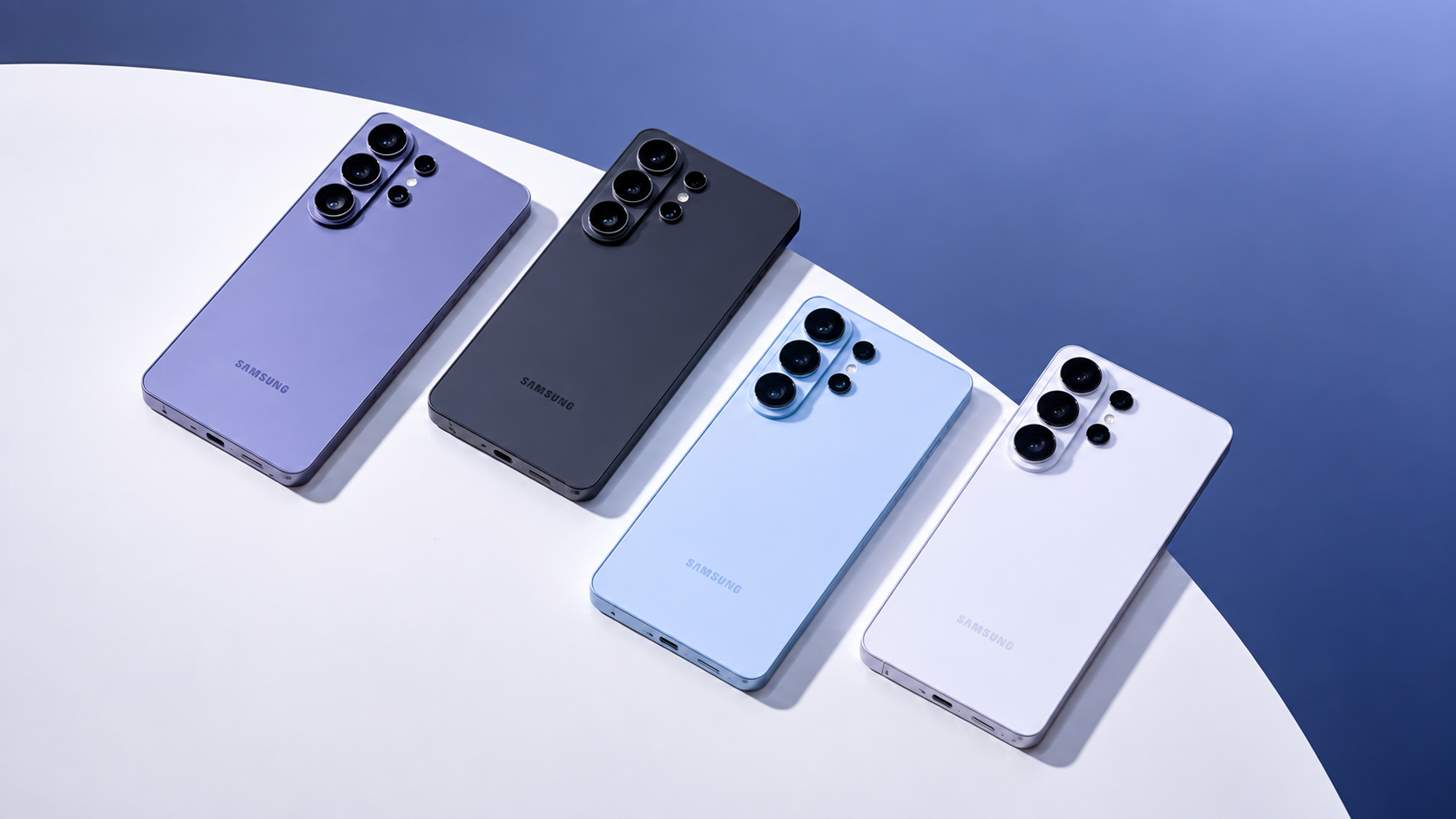
The camera system includes a 200-megapixel main camera, a 50-megapixel ultrawide, a 50-megapixel 5x telephoto and an additional 10-megapixel 3x telephoto camera.
The results are exactly what I expected.
Very good.
What I particularly like is just how flexible the camera system is. I can move from ultrawide to proper telephoto without having to think too much about which camera is being used. The main camera produces plenty of detail, good dynamic range and those characteristically colourful Samsung photos.
Low-light photography has improved too, particularly when shooting video in darker conditions.
But this is also where I have one of my biggest questions about the S26 Ultra.
Samsung hasn’t made an enormous camera leap over the S25 Ultra. The 3x camera also feels rather old for a phone in this price category. Competitors from Xiaomi and other Chinese manufacturers are pushing camera hardware considerably harder.
That doesn’t mean the S26 Ultra has a bad camera. Far from it. This is still one of the most useful and versatile camera systems on the market.
I just wish Samsung had taken a few more risks.
If you’re coming from a three- or four-year-old phone, the difference will be enormous. If you already own an S24 Ultra or S25 Ultra, the argument for upgrading becomes much weaker.
Performance Is as Ridiculous as It Should Be
Inside is the Snapdragon 8 Elite Gen 5 for Galaxy, paired with 12 or 16GB of RAM depending on the model.
In practice, there isn’t much more I need to say other than that this phone is extremely fast.
Apps open instantly, multitasking is effortless and games run exactly as you’d expect from a flagship Android phone at this level. During my weeks with the S26 Ultra, I’ve never felt that performance was a limitation.
Under sustained heavy workloads, particularly extended gaming or camera use, the phone can still get fairly warm. That’s hardly unique to Samsung, but despite the improved cooling, heat hasn’t disappeared entirely.
In normal everyday use, however, it hasn’t bothered me.
5,000mAh Almost Sounds Old-Fashioned – But Battery Life Is Better Than the Number Suggests
This is one area where I find Samsung’s approach a little strange.
The S26 Ultra still has a 5,000mAh battery, while several competitors have moved on to considerably larger batteries using newer silicon-carbon technology.
If you only look at the specification sheet, Samsung seems almost conservative.
In reality, it works much better than those numbers suggest.
Samsung has become very good at efficiency, and I’ve had no major difficulty getting through a normal day. There are also users reporting considerably better battery life than on previous Galaxy models despite the actual battery capacity remaining unchanged.
I’d still like a bigger battery. An Ultra phone should be slightly excessive, and here it feels more like Samsung has become very good at working around relatively conservative battery hardware.
Charging has at least finally become faster, with up to 60W wired and 25W wireless charging.
Less impressive is the lack of built-in magnets for magnetic wireless charging. If I want that functionality, I need a compatible case.
On a phone costing close to SEK 17,000, that feels unnecessarily stingy.
Galaxy AI Is Both Impressive and Confusing
Samsung is, of course, continuing to push AI heavily.
Some of the features are genuinely useful. The image editing tools remain some of the most entertaining and practical features Samsung offers, and things such as removing unwanted objects from photos can work surprisingly well.
Calling and translation features have also become more relevant for those of us in Sweden, as several features now support Swedish.
Then there are features such as Now Brief and Now Nudge, which attempt to understand what I need and surface information before I ask for it.
I’m considerably less convinced by these.
Sometimes they feel clever. Other times, they mostly seem to tell me things I already know.
The bigger problem is that Samsung seems to be trying to do too much at once. There’s Galaxy AI, Google Gemini, Bixby and Perplexity, and as a regular user it isn’t always obvious which assistant I’m actually supposed to use.
Not everything works in Swedish either. Bixby is an obvious example.
Samsung doesn’t need more AI logos. It needs to make the AI features it already has feel like one coherent part of the phone.
This Is Actually the S26 Ultra’s Biggest Strength
After a few weeks, it isn’t the camera, processor or even the Privacy Display that best sums up the Galaxy S26 Ultra for me.
It’s the complete package.
There are phones with bigger batteries. There are competitors with more ambitious camera hardware in certain areas. And there are cheaper phones offering almost the same level of performance.
But very few phones combine a display this good, an integrated S Pen, four useful cameras, enormous performance, good battery life, sophisticated software and seven years of promised updates in one package.
The Samsung Galaxy S26 Ultra is simply incredibly versatile.
That’s also why I find it difficult to recommend upgrading from the S25 Ultra. The differences simply aren’t significant enough. I’d think twice about upgrading from an S24 Ultra as well if I was still happy with it.
If you’re coming from an older Galaxy, however, or simply want an Android phone capable of doing pretty much everything, it’s a very different story.
Price and Conclusion
The Samsung Galaxy S26 Ultra launched in Sweden in spring 2026. The official Swedish retail price for the 256GB model is SEK 16,990. The 512GB version officially costs SEK 18,990, while the 1TB model with 16GB of RAM costs a substantial SEK 22,490.
That’s a lot of money for a phone.
And price might ultimately be the S26 Ultra’s biggest problem.
Samsung has built an excellent smartphone, but the competition has become so good that an Ultra badge and an S Pen don’t automatically justify spending almost SEK 17,000 anymore.
After a few weeks with the Galaxy S26 Ultra, though, I’m more positive about it than I was when I started testing it. Privacy Display turned out to be far more useful than I expected, battery life is better than the specifications suggest, and the cameras remain among the most versatile you’ll find on a smartphone.
At the same time, I wish Samsung had been a little more ambitious. A larger battery, a more modern 3x camera, built-in magnets for wireless charging and a less fragmented AI experience would have made a meaningful difference.
The Galaxy S26 Ultra doesn’t feel like the beginning of a new generation of smartphones.
Instead, it feels like Samsung continuing to refine a formula that was already very good.
And after living with it for a few weeks, it’s difficult not to be impressed by the result.
It isn’t revolutionary. But it might just be one of the most complete Android phones you can buy right now.
Pros: Fantastic display and genuinely useful Privacy Display, excellent and versatile cameras, exceptional performance, built-in S Pen, good battery life and seven years of software updates.
Cons: Very expensive, relatively few major upgrades over the S25 Ultra, still only a 5,000mAh battery, no built-in magnets for wireless charging, and the AI experience feels unnecessarily fragmented.