NewsGaming
Valve’s Cancelled Portal Prequel F-Stop Is Now Playable After Major Leak
Fans have reconstructed Valve’s long-lost camera-based Portal experiment from leaked assets, code and maps—but it is not an official release.
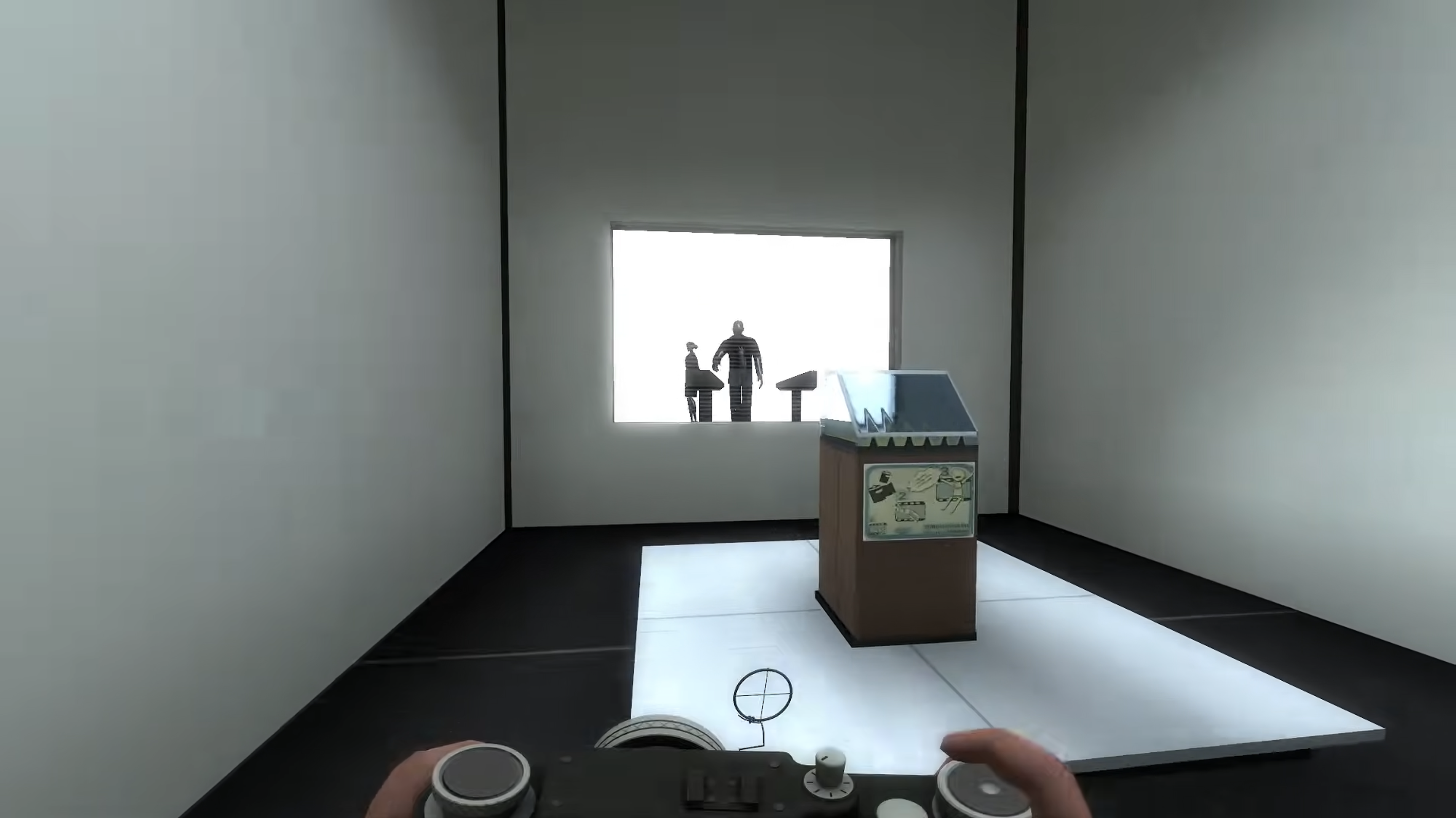
A nearly forgotten chapter of Portal history has resurfaced. F-Stop, an experimental prequel that Valve abandoned almost two decades ago, has reportedly been reconstructed into a playable build using material recovered from multiple leaks. It is an extraordinary look at an alternative direction for one of gaming’s most recognizable puzzle series, although this is neither a finished commercial game nor an official Valve release.
A Portal game without portals
The defining idea behind F-Stop was not a portal gun. Instead, players used a special camera to photograph objects and then place them back into the environment through the resulting images. That changes the logic of the puzzles entirely: rather than finding a route through two connected openings, the player manipulates the objects needed to progress.
The concept may sound familiar to anyone who has played Viewfinder, the modern puzzle game built around placing photographic scenes into three-dimensional spaces. F-Stop predates it by many years, however, and the newly surfaced footage offers a rare opportunity to see how Valve was exploring a similar family of ideas long before the mechanic reached a commercially released game.
How the lost prototype came together
The reconstruction was made possible by several separate disclosures of old Valve development material. A huge Steam-related leak in August 2026 reportedly included much of F-Stop’s artwork and other assets. Additional source code and map files surfaced separately among the Valve Cut Content community, allowing enthusiasts to assemble a version that could actually be played.
Reports describe the resulting build as nearly complete in terms of its prototype campaign, but not fully polished. Some textures and dialogue are still missing. Videos showing the campaign suggest a playthrough of less than an hour. That short runtime makes more sense when F-Stop is understood as an internal experiment rather than a game that was ready to ship.
There is also an important distinction between being playable and being officially available. The recovered material comes from leaks, and Valve has not announced a public release or endorsed the reconstructed build. Anyone encountering purported downloads should be mindful of both the uncertain provenance of the files and the security risks associated with unofficial software.
A glimpse into Valve’s 2007 experiments
F-Stop traces its origins to Valve’s Directed Design Experiments, a three-month period in 2007 during which the studio divided developers into teams to investigate new game concepts. The project took place around the era of The Orange Box, when Portal had demonstrated just how powerful a single, sharply defined puzzle mechanic could be.
Rather than simply repeat the first game’s formula, the F-Stop team explored a different interpretation of Aperture Science. Contemporary reporting on the recovered prototype describes a distinct visual direction and early versions of ideas that would later become associated with the wider Portal universe. Elements of its dialogue and worldbuilding were eventually repurposed for Portal 2.
That makes the prototype interesting for more than its novelty. It reveals how much experimentation can happen between successful releases, and how abandoned ideas can still influence what players eventually see. Game development is full of branches that never become products; this one happens to have left behind enough material to be examined years later.
Why this leak matters
For Portal fans, the obvious attraction is getting to experience a genuine alternative to the familiar test chambers and portal-based puzzles. For people interested in game preservation, the story is more complicated. Reconstructing an unfinished game can preserve knowledge of its design, but a build assembled from leaked proprietary code also raises questions that a sanctioned archival release would not.
It is tempting to call F-Stop a lost Portal game finally released, but that overstates what has happened. What exists is a community-assembled snapshot of an abandoned prototype, with visible gaps and no official support. Even so, it offers something that screenshots and secondhand descriptions cannot: a chance to understand the original mechanic in motion.
Whether Valve ever comments on the leak remains to be seen. In the meantime, F-Stop stands as a fascinating reminder that the Portal series could have evolved in a radically different direction—and that some of the most intriguing pieces of gaming history were never intended for the public to play.