News
Retroid Pocket Duo Looks Like a Serious Dual-Screen Handheld
Retroid's Pocket Duo pairs two 120Hz OLED displays with a Qualcomm Q-7790, while the cheaper Duo Lite takes a more modest approach to the same dual-screen idea.
Retroid is moving into purpose-built dual-screen Android handhelds with two clamshell models: the Retroid Pocket Duo and Pocket Duo Lite. The concept is familiar if you have spent time with Nintendo's DS family, but the hardware is aimed at modern Android gaming and emulation rather than simply recreating an old handheld.
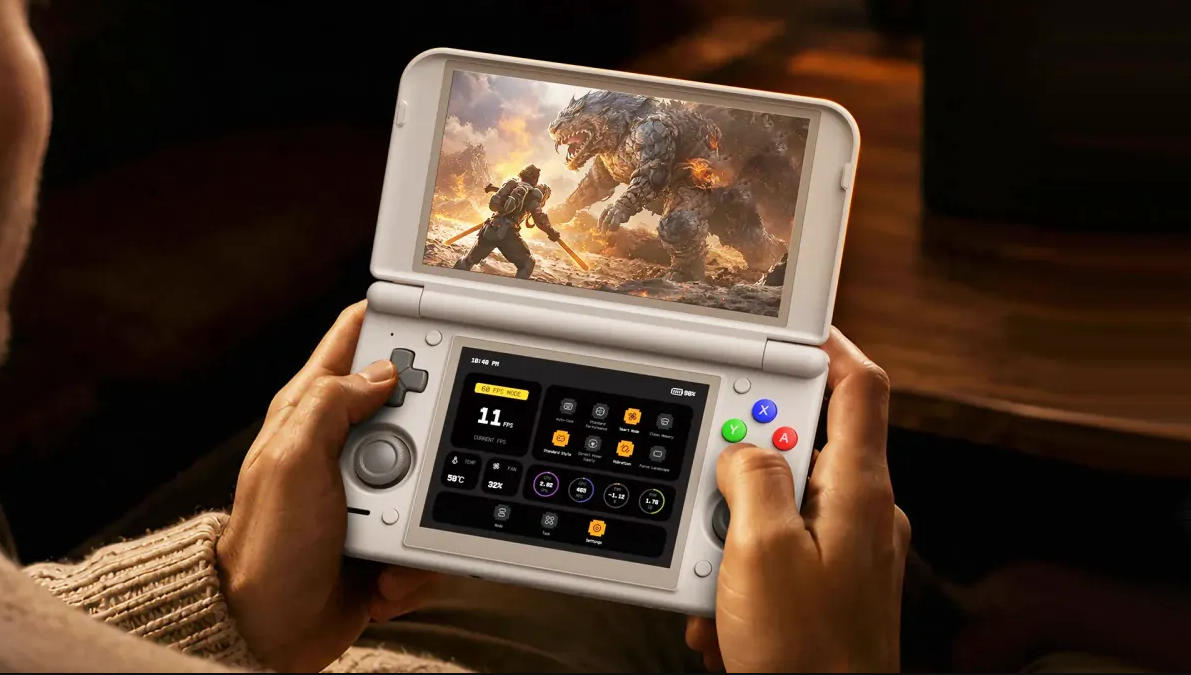
The more interesting model is the regular Pocket Duo. Retroid's early material pairs a 5.5-inch 16:9 upper display with a 4.5-inch 4:3 lower screen, with both OLED panels running at 120Hz. That split makes practical sense: widescreen games and streaming can use the larger top panel, while DS and 3DS software gets a dedicated second display with proportions better suited to maps, menus and touch controls.
The Pocket Duo is the premium model
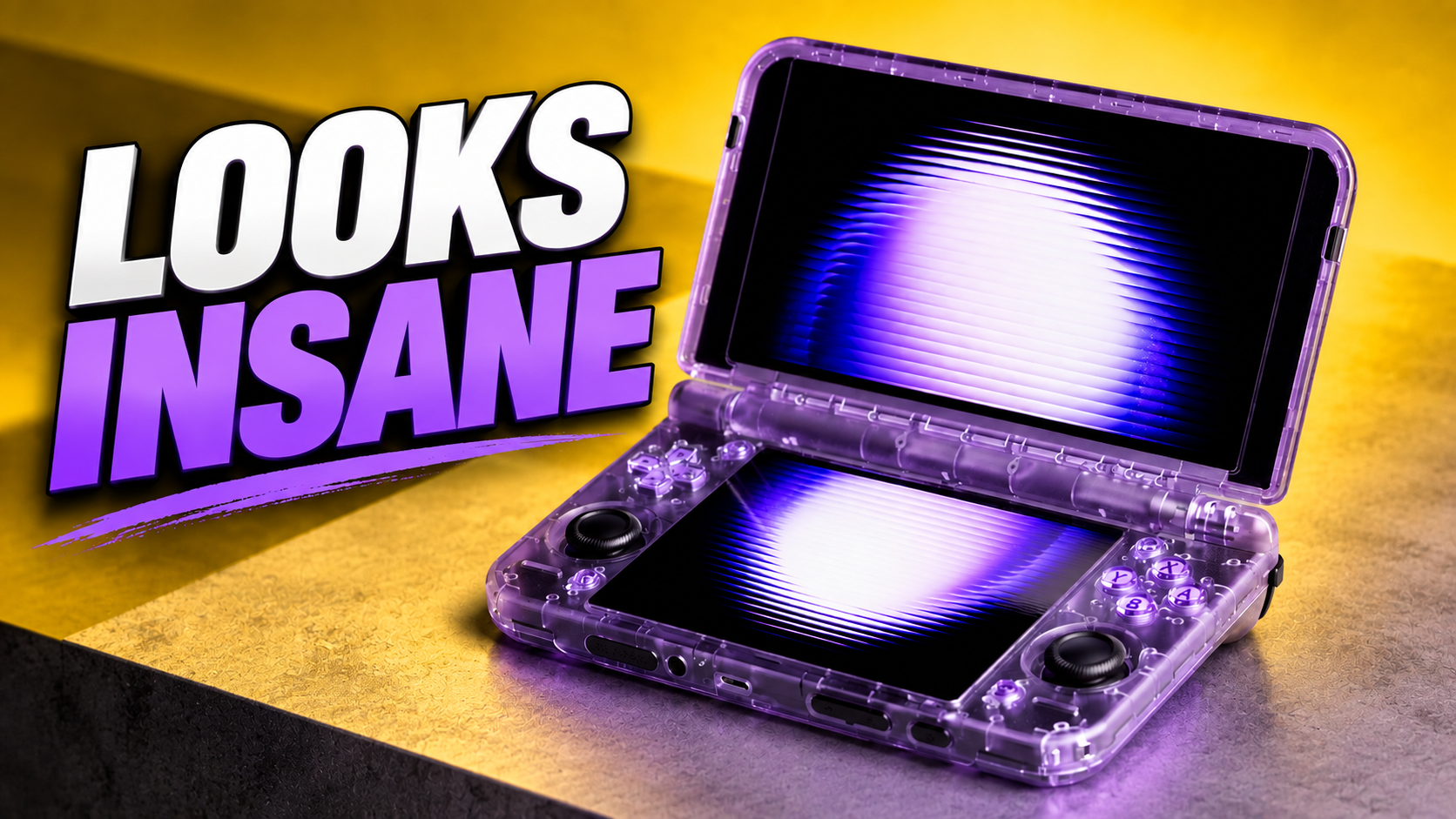
Retroid has confirmed a Qualcomm Dragonwing Q-7790 platform for the Pocket Duo, while the company's footage also shows active cooling and a 180-degree free-stop hinge. The controls include conventional analogue sticks, a D-pad and a full complement of shoulder inputs, and Retroid has already shown a transparent purple version.
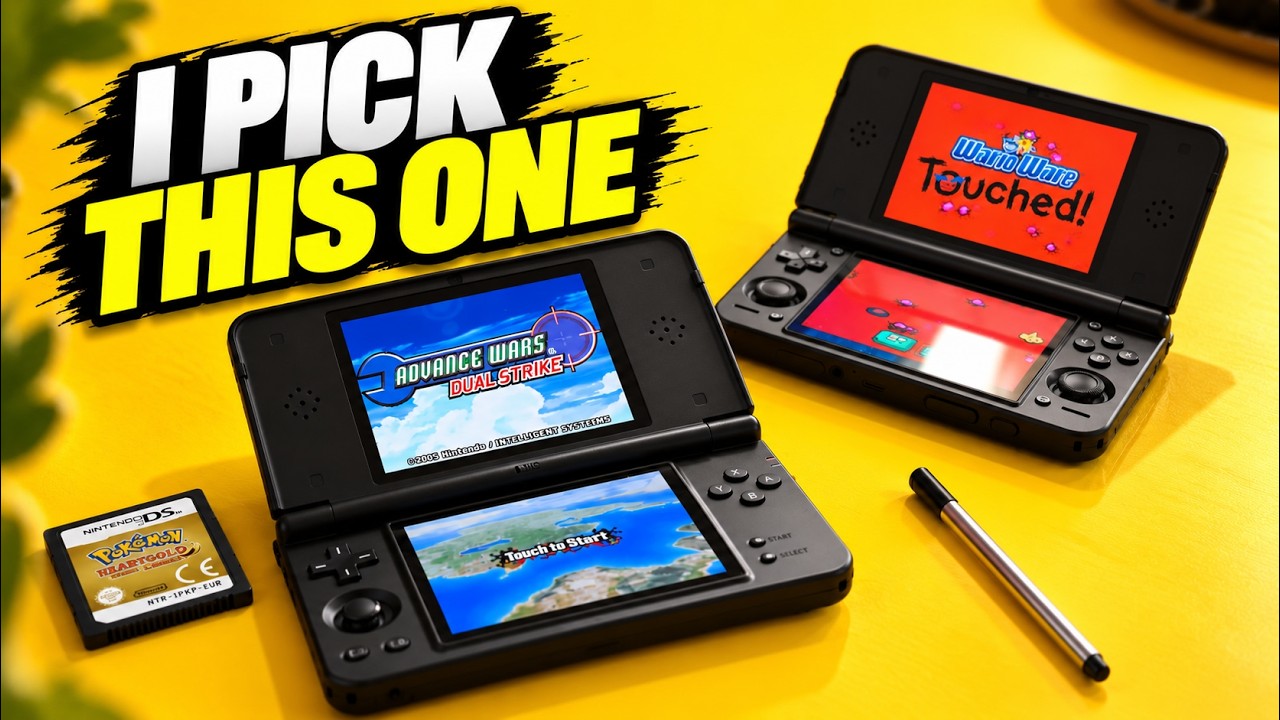
TechCravers' source video also highlights a cheaper Pocket Duo Lite. In the material shown there, the Lite keeps the 5.5-inch upper screen but moves to 60Hz LCD panels and a smaller 4.2-inch lower display. That makes it more than a simple lower-priced configuration: display technology and the second-screen size separate it clearly from the OLED-equipped Duo.
Early 3DS footage is promising, but it is still prototype footage
Retroid's own demonstration is where the dual-screen format starts to look useful rather than merely novel. The company showed an engineering prototype running Nintendo 3DS titles through Azahar at four times the original resolution, with gameplay on the upper panel and secondary information or touch controls below. Nintendo DS emulation was also demonstrated with melonDS and stylus-driven software.
Those clips should not be mistaken for independent performance testing. They come from Retroid and were captured on engineering hardware, so final thermals, sustained performance and software behaviour remain unknown. Even so, the demonstration shows the intended experience clearly: two native displays remove much of the screen-swapping and layout compromise that comes with running dual-screen systems on a conventional single-panel handheld.
The Q-7790 makes pricing especially important
The Pocket Duo is not simply Retroid's fastest hardware with another screen attached. Its Q-7790 sits below the QCS8550 platform used in the company's higher-performance Pocket Nova, while the Duo adds the cost and complexity of two OLED panels, a hinge and active cooling. That balance between processor performance and form factor is likely to define whether the device feels competitive.
TechCravers' video estimates that a price around $239 to $249 would make sense, with $229 described as particularly aggressive. That is analysis rather than announced pricing: Retroid has not confirmed a retail price or release date for the Pocket Duo at the time of writing. The same uncertainty applies to several final specifications, including memory, storage and battery capacity.
Why the screen layout matters
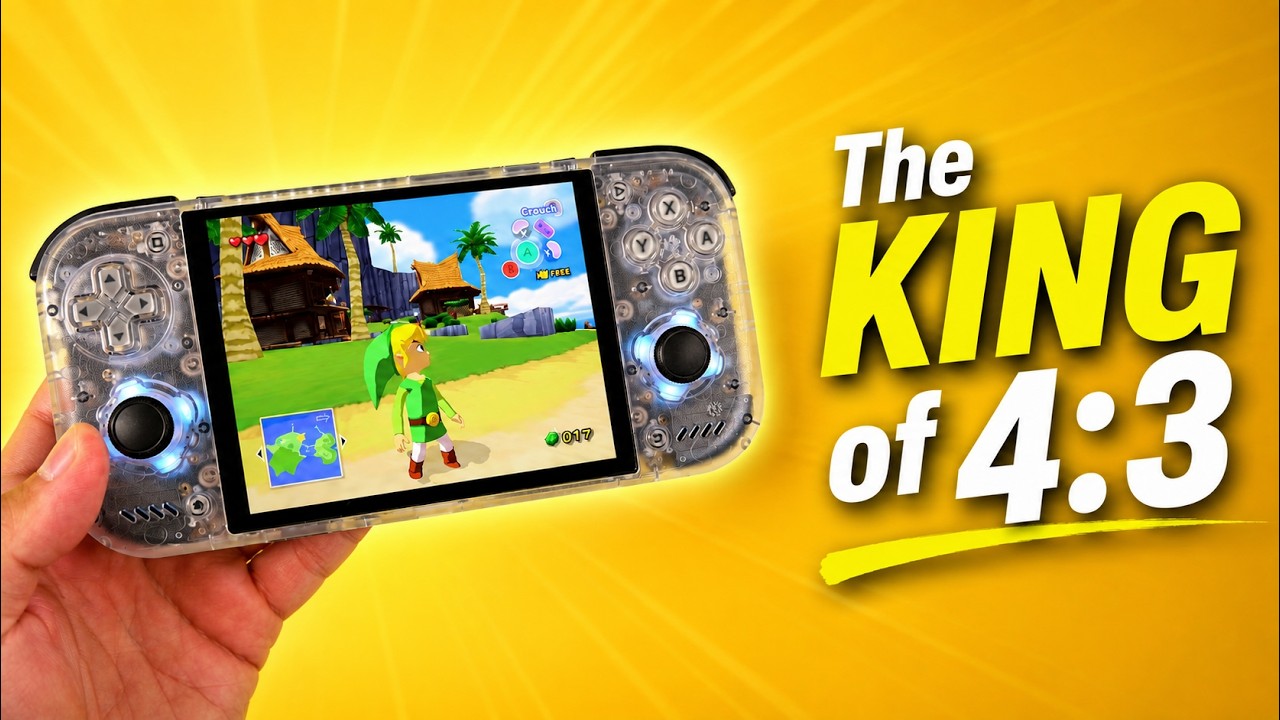
The Duo's asymmetric displays could prove to be one of its strongest ideas. A 16:9 upper panel is useful well beyond DS and 3DS emulation, covering Android games, streaming and other widescreen systems without forcing the main experience onto a squarer display. The 4:3 lower panel can then remain available for touch interfaces and secondary screens.
That also gives Retroid a distinct angle in a growing category that already includes devices such as the AYN Thor. Raw performance will matter, but so will ergonomics, battery life, emulator integration and the ease of managing two screens in Android. Until production hardware is available, those parts of the experience cannot be judged from a teaser.
A promising idea with key details still missing
Based on what Retroid has shown, the Pocket Duo has the ingredients for a compelling dual-screen handheld: two high-refresh OLED panels, a sensible mix of aspect ratios, dedicated clamshell hardware and enough performance to make enhanced 3DS emulation plausible. The Lite broadens the idea with a more modest display configuration, although its final value will depend heavily on price.
For now, the biggest questions are straightforward. Retroid still needs to confirm pricing, release timing, battery capacity and the remaining configuration details, and manufacturer footage cannot tell us how the finished hardware behaves over long sessions. The Pocket Duo looks promising, but the final judgement has to wait for production hardware and real-world testing.
Sources
About the author
TechCravers
Writes about consumer technology and gaming for TechCravers.