ReviewGame reviewReviews
The Legend of Zelda: Ocarina of Time (2026) Review – Somehow, Nintendo Made Perfection Even Better
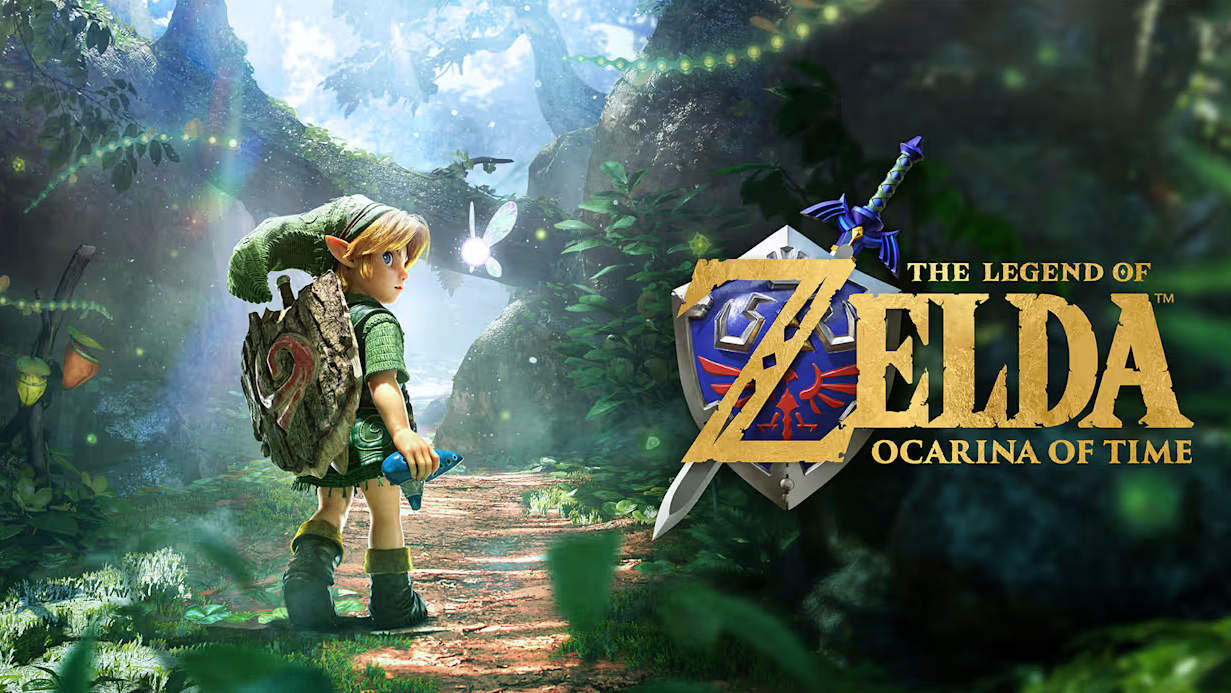
My favourite game of all time has returned on Nintendo Switch 2. I thought my expectations were impossible to meet. Nintendo somehow exceeded every one of them.
There are games I love, games I admire, and games that helped define who I am. The Legend of Zelda: Ocarina of Time belongs to that last category. The 1998 Nintendo 64 original is not merely my favourite Zelda; it is my favourite video game of all time. So when Nintendo announced a full remake for Switch 2, excitement came with something close to dread. How do you improve on the game I already consider the greatest ever made? And what happens if the memories are better than the reality?
Now that Ocarina of Time has returned, I can say something I never expected to write: Nintendo has completely surpassed my expectations. This is not a remake that simply dresses an old classic in expensive new clothes. It makes the adventure feel as extraordinary in 2026 as it did in 1998. Giving it a 10/10 is the easiest decision I have made in years. The much harder question is whether it might actually be better than the original.
Returning to a Hyrule that never really left me
Ocarina of Time has always been about more than a quest to defeat Ganondorf. It is about childhood giving way to adulthood, about friendships that cannot remain unchanged, and about discovering that saving the world can cost you a piece of the life you knew. That melancholy runs beneath its fairy-tale surface. The Kokiri Forest feels safe until you must leave it. Hyrule Field promises freedom, yet the passage of time eventually changes everything. The story works because its places are emotional landmarks, not merely locations on a map.
What makes this remake remarkable is that Nintendo understands that distinction. It does not need to reinvent the sequence of events or replace every puzzle to justify its existence. The pleasure of setting out from Kokiri Forest, meeting Zelda, discovering the ocarina's powers and eventually drawing the Master Sword remains central. Those moments are familiar, but their presentation makes them feel newly immediate. This is a game confident enough to preserve its identity while changing almost everything about how that identity reaches the player.
The Hyrule I imagined in 1998 is finally on screen
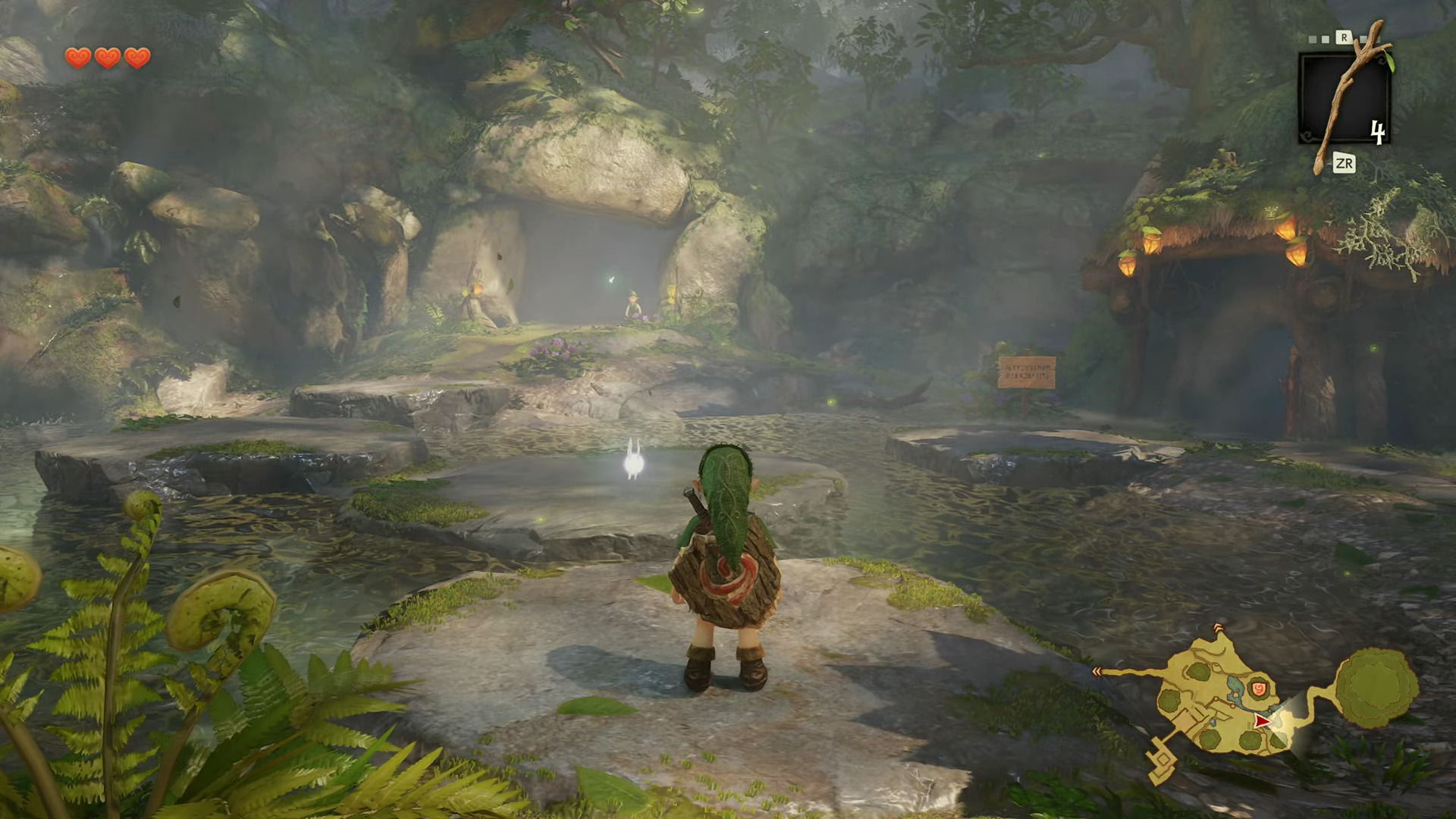
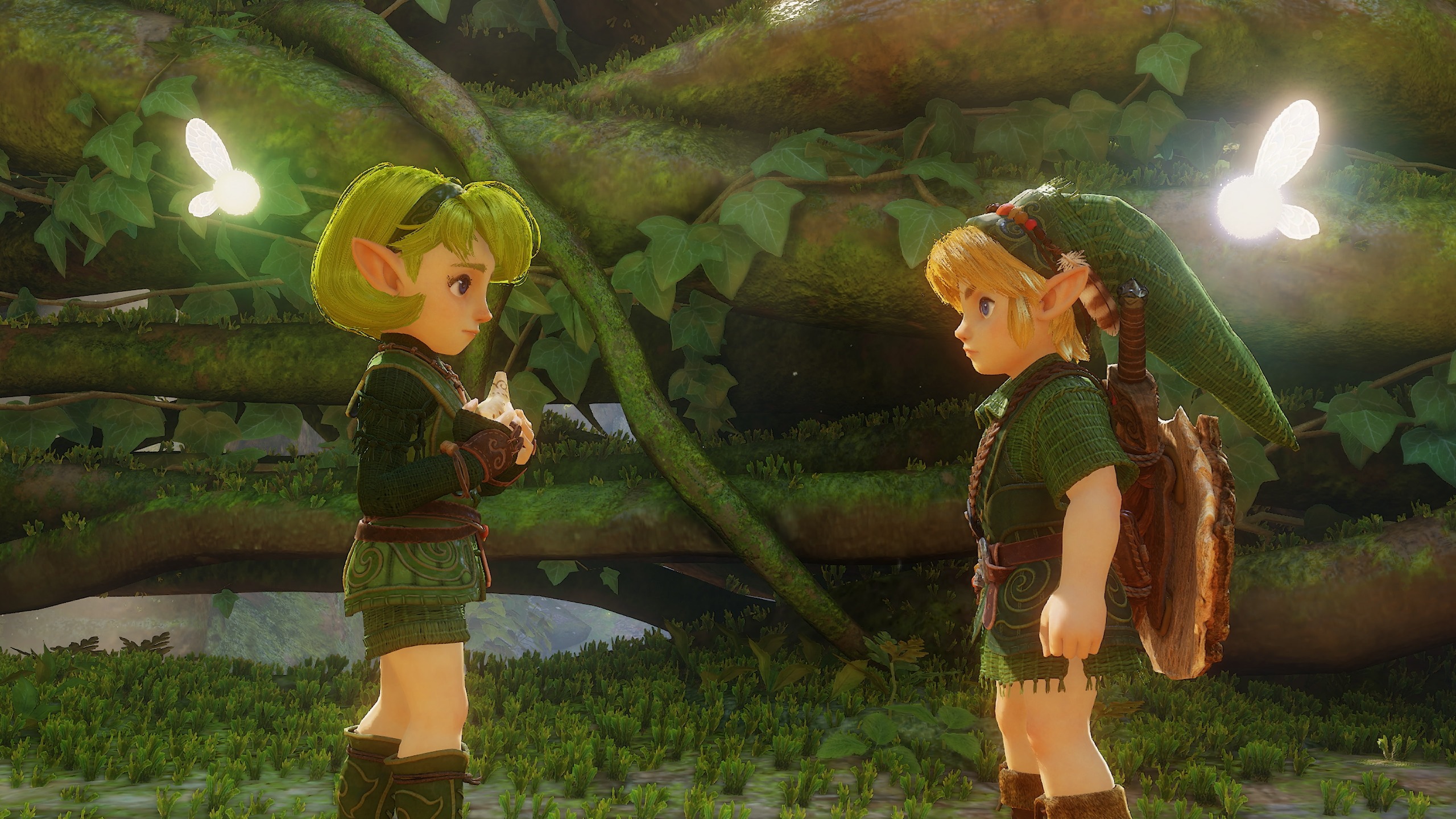
The visual transformation is astonishing, not because Nintendo has pursued realism at any cost, but because the new environments feel like the world my imagination filled in between the Nintendo 64's polygons. Sunlight moves across grassy fields. Forest paths have depth and texture. Villages are full of architectural detail without losing their storybook personality. The contrast between welcoming Kokiri Forest and the more ominous corners of Hyrule remains essential, and the remake gives each place a richer sense of atmosphere.
It would have been easy to turn this into a glossy, generic fantasy game. Instead, its strongest images retain that unmistakable Zelda quality: colour, shape, whimsy and a hint of sadness existing together. Hyrule Field still matters because of the anticipation it creates, not because of how many activities are crammed into every square metre. A distant landmark can still inspire the same urge to explore that it did nearly three decades ago. The world is beautiful, but crucially it has not forgotten how to be readable.
The technical presentation also supports the illusion. Contemporary reviews describe sharp, fluid play on Switch 2, with the modern visual treatment complemented by a substantially reworked camera. There are small presentation compromises, including some overly smooth distant scenery noted elsewhere, but none change my verdict. Art direction, consistency and the way a world makes you feel matter far more than an isolated technical blemish.
Modern controls without losing classic Zelda
The original's Z-targeting was revolutionary because it made three-dimensional combat comprehensible. Yet anyone returning to the Nintendo 64 version today can feel how much action-adventure controls have evolved. The remake respects that history without asking players to tolerate every old limitation. Full camera control gives the environment room to breathe, movement is more flexible, and a modernised approach to accessing equipment makes exploration flow far more naturally.
This matters most in the places where the original occasionally fought against its own brilliance. Repeatedly pausing to change equipment was never the clever part of a dungeon puzzle. It was simply the interface getting in the way. Streamlining that process does not make the puzzle less intelligent; it lets the puzzle shine. More direct movement and camera options also make combat and traversal feel more intuitive, particularly for players who grew up with modern third-person adventures rather than the N64 controller.
The important distinction is that smoother does not automatically mean shallower. The satisfaction of identifying a dungeon's central idea, learning its rules and eventually seeing the whole structure click into place is intact. Nintendo has removed friction without sanding away the adventure's personality. That is an extraordinarily difficult balance to strike.
Why these dungeons are still special
Modern Zelda has achieved incredible things with freedom and experimentation, particularly in Breath of the Wild and Tears of the Kingdom. But Ocarina of Time offers a different kind of magic: the meticulously paced, authored dungeon. Each temple has a strong identity, its own visual language and a particular rhythm of discovery. The Forest Temple is unsettling and mysterious; the Fire Temple feels imposing; the Water Temple demands that you think about the environment as a connected mechanism rather than a series of isolated rooms.
A good dungeon does not merely test whether you can solve an individual puzzle. It teaches you to understand a space. You remember locked doors, suspicious ledges and unreachable rooms, then return with a new ability or a better idea. The moment you finally understand how its parts fit together can be as satisfying as defeating the boss waiting at the end. That design philosophy has aged remarkably well, and the remake's more approachable controls make its strengths easier to appreciate.
It also reminds me how expertly the original balanced scale with momentum. This is not a world that needs a thousand map markers. It needs the right secret behind the right wall, a song that changes what is possible, and an unforgettable moment when a familiar place reveals something new. Twenty-eight years later, those fundamentals remain exceptional.
Music, voices and the weight of memory
Koji Kondo's music is inseparable from Ocarina of Time. A few notes can bring back the warmth of Kokiri Forest, the restless energy of Hyrule Field or the quiet ache of a farewell. The remake's orchestral arrangements give those melodies new breadth without abandoning what makes them instantly recognisable. It is not simply a matter of making everything louder or grander. The best arrangements understand when to soar and when to leave space for emotion.
Nintendo has also expanded the cinematic presentation with voiced cutscenes and additional dialogue. That is a potentially dangerous choice for a game whose characters have lived in players' imaginations for so long. Voices can make a familiar character feel suddenly unfamiliar. Yet the larger narrative ambition makes sense here: Ocarina of Time has always had the emotional architecture of an epic, and the remake gives its most important exchanges more room to resonate. Link's journey is still the heart of the story, not the production values surrounding it.
I keep coming back to the same idea: this game understands memory. Its music can make you feel like a child again, but its themes of change and loss hit differently when you are older. The remake does not erase the distance between those two experiences. It bridges it. That is a much more meaningful achievement than a prettier character model.
A masterpiece that still has a few imperfections
A perfect score does not require pretending that every decision is perfect. The remake is deliberately faithful, which means experienced players will recognise much of its structure and many of its solutions. The absence of Master Quest at launch is disappointing for anyone hoping for a more demanding alternative, and the limited manual-save arrangement feels unnecessarily restrictive. Some players may also prefer the spare, unvoiced storytelling of the original, where imagination did more of the work.
Those criticisms deserve to be said plainly. They simply do not outweigh what Nintendo has accomplished. The central question for a remake is not how many new features it can advertise. It is whether the new version captures the spirit of the original while making a compelling case for its own existence. On that measure, Ocarina of Time is an extraordinary success. Its conservatism is not a lack of ideas; much of the time, it is evidence of knowing which ideas should never be discarded.
Can a remake really be better than the greatest game ever made?
This is where my affection for the original makes the answer complicated. The Nintendo 64 game changed what I believed video games could be. No remake can reproduce that exact historical moment, or give me back the experience of discovering Hyrule for the first time. In that sense, the original will always be irreplaceable. It belongs to a particular time in my life and in the history of the medium.
But that does not mean the remake has to live forever in its shadow. Judged as an adventure to sit down and play today, the Switch 2 version makes a persuasive case for being the definitive Ocarina of Time. It preserves the structure, wonder, music and emotional core while making the world more expressive and the act of playing more natural. I can honour what the original achieved and still acknowledge that Nintendo has delivered something even more complete for the present day.
In fact, the highest compliment I can pay this remake is that it has made me stop comparing screenshots and start caring about the adventure all over again. I am not playing to inspect how Nintendo has rebuilt an old favourite. I am playing because I want to be in Hyrule. That is the point where a remake stops being a technical exercise and becomes a masterpiece in its own right.
Verdict: the reason to own a Switch 2
I do not give a 10/10 lightly, particularly to a remake of the game I already regard as the best ever made. But Nintendo has taken an almost impossible assignment and exceeded even my most unreasonable hopes. This is visually breathtaking, musically magnificent and more inviting to play, while retaining the beautifully measured adventure that made Ocarina of Time immortal in the first place.
If you have never played Ocarina of Time, I envy you. You are about to discover why this journey has meant so much to so many people for so long. If you know it by heart, there is a different kind of wonder waiting: the chance to return to a place you thought you knew and find it alive again. For me, this remake is worth buying a Nintendo Switch 2 for even if you never purchase another game for the system. I am not sure I am ready to declare that it has surpassed the original's place in history. I am absolutely certain it has surpassed my expectations. 10/10.
TechCravers verdict
The Legend of Zelda: Ocarina of Time (2026)
Nintendo has somehow managed to improve upon what I consider the greatest game of all time. Ocarina of Time (2026) is a breathtaking remake that preserves everything that made the original legendary while elevating the experience beyond my wildest expectations. An absolute masterpiece, and a game worth buying a Nintendo Switch 2 for all on its own. 10/10.
What we like
- A breathtaking remake of one of the greatest games ever made
- Stunning visuals that bring Hyrule to life like never before
- Beautifully reimagined soundtrack that perfectly captures the magic of the original
- Modernized controls and quality-of-life improvements without losing the original's soul
- Timeless storytelling, unforgettable characters, and brilliant dungeon design
- A masterpiece that alone justifies buying a Nintendo Switch 2
What we don't
- Some of the original's quirks remain
- The magic of experiencing Ocarina of Time for the first time can never truly be recreated