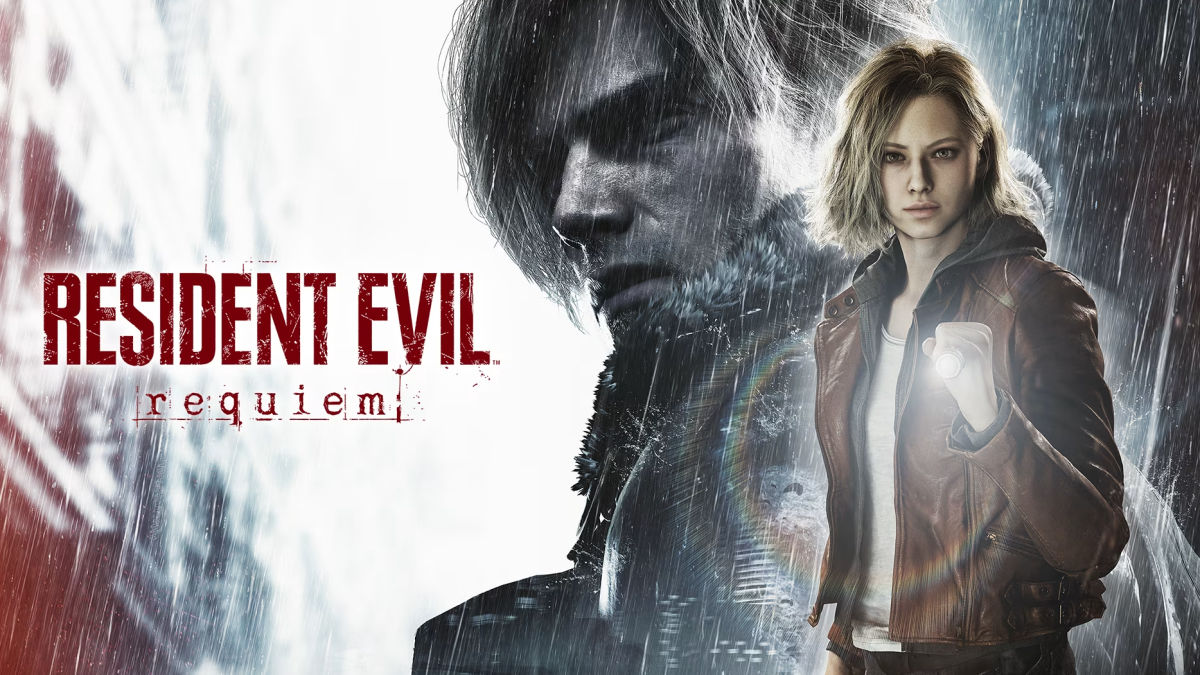
Resident Evil Requiem (Switch 2) – A Masterclass in Modern Survival Horror
When I first booted up Resident Evil Requiem on my Nintendo Switch 2, I wasn’t just starting another sequel — I was stepping back into the darkest, most suffocating corners of survival horror. Within minutes, it became clear that this wasn’t a safe, nostalgic retread. Capcom has managed something rare here: a game that fully understands what has made Resident Evil endure for decades — tension, resource management, atmosphere, and memorable characters — and then refines all of it into something that feels modern, confident, and incredibly polished.
This is not just another strong entry in a legendary franchise. For me, Requiem stands shoulder to shoulder with the very best in the series. In fact, I would go as far as saying it may be the best Resident Evil game ever made — and that’s not something I say lightly.
Story & Characters – A Perfect Balance of Old and New
One of Requiem’s greatest strengths is how intelligently it bridges the past and the future of the franchise. The narrative follows two protagonists with sharply contrasting perspectives: Grace Ashcroft, an FBI analyst drawn into something far beyond her training, and Leon S. Kennedy, the battle-hardened veteran whose name is synonymous with Resident Evil.
Grace is one of the most compelling new characters Capcom has introduced in years. She isn’t a super-soldier or an unstoppable action hero. She feels human — vulnerable, observant, and often overwhelmed. Her sections lean heavily into psychological horror and isolation. You feel her hesitation when opening doors. You feel the weight of every limited bullet in your inventory. Her storyline captures that classic Resident Evil feeling of being trapped somewhere you absolutely should not be.
Then there’s Leon. Older, more grounded, and clearly shaped by everything he’s endured, he brings a different energy. His campaign segments are more combat-driven, but not in a way that abandons horror. Instead, it feels like a natural evolution of the Resident Evil 4 formula — tight third-person shooting, tactical positioning, and encounters that are intense without becoming mindless action.
What makes this dual structure work so well is pacing. Just when the horror becomes suffocating, the game shifts gears. When the action ramps up, it never overstays its welcome. The contrast between Grace and Leon creates a rhythm that keeps the experience fresh for its entire runtime. It feels deliberate and carefully structured rather than fragmented.
Gameplay & Design – Survival Horror Refined
At its core, Requiem understands tension.
Grace’s sections are slow, methodical, and nerve-wracking. Exploration is deliberate. You listen more than you shoot. Every creaking floorboard or distant, distorted growl puts you on edge. Enemies are dangerous not because they’re bullet sponges, but because resources are limited and positioning matters. It’s survival horror in its purest form.
Leon’s chapters shift toward a more assertive style of play. Combat feels precise and weighty, with excellent feedback from every weapon. Encounters are layered — you’re often managing space, multiple enemy types, and environmental hazards simultaneously. It feels like the best aspects of classic third-person Resident Evil modernized without losing tension.
The level design deserves special praise. From abandoned medical facilities drenched in cold, clinical lighting to crumbling urban environments reclaimed by decay, every location feels purposeful. There’s a strong emphasis on interconnected spaces, shortcuts, and environmental storytelling. Notes, visual clues, and subtle environmental details build the world without over-explaining it.
Puzzles are satisfying without being frustrating. They’re integrated naturally into the environment and often reinforce the eerie atmosphere rather than interrupting it. Resource management never feels like a gimmick — it’s a constant underlying pressure that enhances immersion.
Performance on Nintendo Switch 2 – Shockingly Impressive
What truly elevates my experience is how well Resident Evil Requiem performs on the Nintendo Switch 2.
Let’s be honest — when a major, visually ambitious survival horror title launches across powerful platforms, expectations for a hybrid console version are usually cautious. But Capcom and the port team have delivered something remarkable here.
On Switch 2, Requiem runs close to a stable 60 frames per second in both handheld and docked modes. That smoothness makes a massive difference in a game where tension, aiming precision, and atmosphere matter so much. Controls feel responsive, animations remain fluid, and combat encounters maintain their intensity without technical distractions.
There are visual compromises — slightly softer textures, simplified hair rendering, and minor reductions in environmental density — but they’re smart trade-offs. The overall visual presentation remains strong, with dynamic lighting and shadow work still creating a deeply oppressive mood.
Most importantly, the experience feels complete. Not “impressive for a handheld,” not “good enough,” but genuinely excellent.
The Power of Portability
There’s something uniquely effective about playing horror on a handheld system.
Experiencing Requiem in handheld mode, with headphones on and the screen close to your face, amplifies the intimacy of the horror. The darkness feels darker. The sound design feels closer. It becomes personal.
Whether I was exploring a dim corridor late at night or sneaking in a session while traveling, the atmosphere never broke. The tension traveled with me. That portability adds a dimension the other versions simply cannot replicate.
The fact that a game of this scale and visual ambition runs this smoothly on a hybrid system still feels slightly surreal — and it genuinely enhances how I experienced the game.
Visuals & Audio – Atmosphere Above All
While it doesn’t match the raw technical ceiling of PS5 or high-end PC, the Switch 2 version absolutely holds its own. Lighting is the real star here. Flickering fluorescents, distant fires, and narrow beams of flashlight illumination create constant unease.
Character models are expressive, and environmental detail remains strong enough to sell every location. Occasional texture softness is noticeable if you’re looking for it, but during actual gameplay — especially in tense moments — it fades into the background.
The sound design is exceptional. Subtle ambient noise, distant metallic scraping, echoing footsteps — everything works together to create sustained anxiety. When combat erupts, the audio mix delivers weight and urgency without overwhelming the player.
Voice performances, particularly for Grace and Leon, feel grounded and emotionally believable. That authenticity elevates the story and keeps the stakes feeling real.
Replayability & Longevity
While not an open-world experience, Requiem is tightly constructed in a way that encourages replayability. Hidden items, alternate approaches to encounters, unlockables, and performance-based rankings make return playthroughs appealing.
The dual-protagonist structure also adds replay value. Re-experiencing the story with full knowledge of how both arcs intertwine reveals clever narrative layering.
Speedruns, higher difficulty modes, and mastering combat efficiency all add depth for longtime fans. Like the best Resident Evil titles, this is a game that gets better the more you understand it.
Room for Growth
No game is flawless. The tonal shift between Grace’s pure horror and Leon’s more action-heavy sequences may not appeal equally to everyone. At times, the contrast can feel sharp.
But for me, that contrast is part of what makes Requiem special. It embraces the full identity of Resident Evil — not just one era or interpretation. It honors the slow-burn terror of the early games while confidently carrying forward the more dynamic, combat-driven evolution of later entries.
Final Verdict – SCORE 9/10
Resident Evil Requiem is a triumph. It’s confident, atmospheric, mechanically sharp, and narratively compelling. It respects its legacy without being trapped by it.
On Nintendo Switch 2, it feels even more impressive — not as a compromise, but as a fully realized version that stands proudly alongside its counterparts.
For me, this isn’t just a great Resident Evil game. It’s one of the very best the series has ever delivered and a must-play for both longtime fans and newcomers alike.