News
Xiaomi 18 Pro Max Arrives in Sweden With a Smaller Battery Than in China
Xiaomi’s latest flagship phones bring rear AMOLED screens and Leica cameras to Sweden, but European buyers get reduced battery capacities.
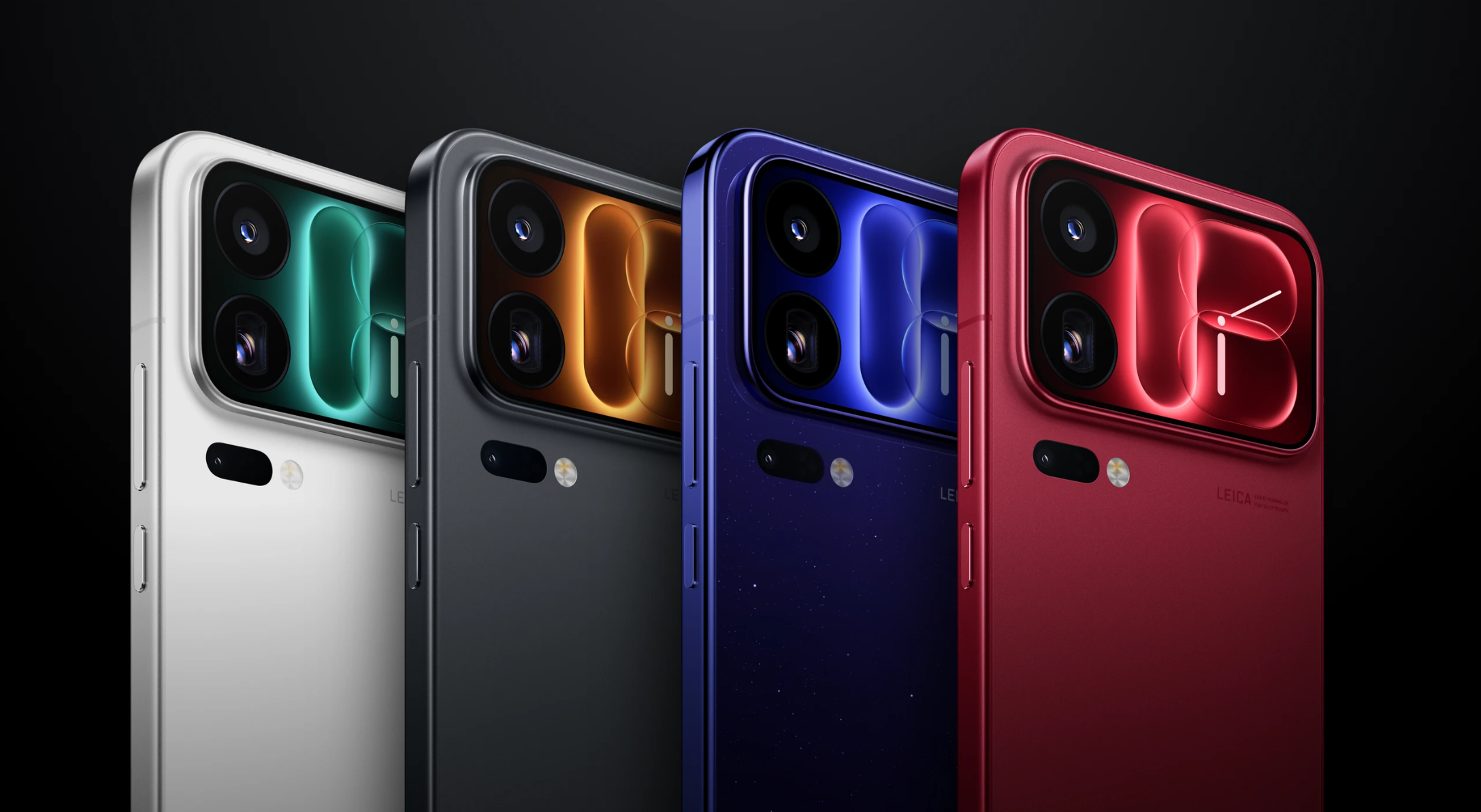
Xiaomi has brought its 18 Pro and 18 Pro Max smartphones to Europe, including Sweden, following their earlier debut in China. Both devices offer an unusual second screen beside the rear cameras, ambitious Leica-branded camera hardware and Qualcomm’s latest flagship chips. But there is a notable trade-off for international buyers: neither phone gets the same battery capacity as its Chinese counterpart.
A second screen that does more than show notifications
The most distinctive feature is the AMOLED display built into the rear camera area. It measures 2.7 inches on the Xiaomi 18 Pro and 2.9 inches on the larger Pro Max. Rather than simply repeating information from the main display, it can show notifications, directions and useful items such as a boarding-pass QR code. It can also serve as a viewfinder when taking selfies with the main cameras.
Xiaomi is also promoting the ability to create small applications for the rear display using text prompts. That is an intriguing idea, although how useful these miniature apps will be in everyday life remains to be seen. A rear screen could genuinely change how people take photos or check information without turning their phones around; it could just as easily become something owners rarely touch.
The European battery compromise
Battery capacity is where the global versions depart most clearly from the Chinese models. The Xiaomi 18 Pro Max has a 7,050 mAh battery in Europe, compared with 8,500 mAh in China. The smaller Xiaomi 18 Pro drops from 7,000 mAh to 6,000 mAh. Those differences amount to reductions of roughly 17% and 14%, respectively.
- Model
- Europe
- Xiaomi 18 Pro
- 6,000 mAh
- Xiaomi 18 Pro Max
- 7,050 mAh
Those figures are meaningful on paper, but capacity alone cannot tell us exactly how long either phone lasts. Real-world endurance also depends on the display, chipset, software and usage patterns. Independent testing will be needed to establish whether the smaller European batteries translate into a noticeable disadvantage during a typical day.
Wired charging reaches up to 90 W on the Pro and 100 W on the Pro Max, with wireless charging rated at up to 50 W. Fast charging may help compensate for a smaller battery, but it is not the same as having more capacity in the first place.
Flagship cameras and a privacy-focused display
Both phones feature a Leica-developed camera system with a 200-megapixel main camera, a 200-megapixel periscope telephoto camera and a 50-megapixel ultrawide camera. Xiaomi also lists 8K video recording. The main displays measure 6.4 inches on the Pro and 6.9 inches on the Pro Max.
The company calls its front-panel feature Privacy Display. It is designed to restrict viewing angles so that people sitting nearby have a harder time reading the screen. Xiaomi acknowledges that content may still be visible from certain angles, so it should not be treated as an absolute privacy guarantee.
The Pro uses the Snapdragon 8 Elite Gen 6, while the Pro Max steps up to the Snapdragon 8 Elite Extreme Gen 6. Both run HyperOS 4 based on Android 17. The devices also carry an IP68 rating and are offered in black, white, Cosmic Blue and Velvet Red.
Swedish prices put them firmly in premium territory
In Sweden, the Xiaomi 18 Pro is listed at SEK 15,990 with 256 GB of storage, while the 18 Pro Max starts at SEK 17,990 for the same storage capacity. The largest Chinese configurations, with 16 GB of RAM and 1 TB of storage, are not part of the reported Swedish lineup.
At those prices, the phones face demanding expectations. The rear display is an appealing point of differentiation, and the camera specifications look impressive, but buyers in Sweden are being asked to pay flagship money for versions with smaller batteries than those sold in China. Whether the software features and photographic performance justify that compromise is a question for proper hands-on testing, not a specification sheet.
Where to find it
Sources
About the author
TechCravers
Writes about consumer technology and gaming for TechCravers.